Friday, February 5, 2010

Jollibee!

Jollibee is the McDonalds/KFC of the Philippines. The Jollibee mascot appears to be very popular with children! Jollibee restaurants can be found in several other countries. In the U.S., check out Jolibee's in California, Nevada and New York.
The menu consists of burgers, hot dogs and chicken, as well as noodle and rice dishes.

I don't think I'll be able to find much here (or at McDonalds) that is in sync with my new healthier eating plan. But I may have to try the Chickenjoy. According to the website, it's both "Crispylicious" and "Juicylicious". Who could resist?

Filipino Language

I've been trying to learn a few words in Tagalog (Ta-GA-Lug), which is the basis for Filipino, one of the 2 official languages of the Philippines. Thanks to translation books we received for Christmas and birthday presents, and with the help of a few Filipino colleagues and You Tube, I've been attempting to practice a bit.

While English is the other offical language, given the age we except for our child (0-36 months at referral) and depending on the Child Care Agency or Foster setting, he/she may not have been exposed to much English but may know a litte Tagalog. If our child lives on an island that speaks a different dialect, we'll at least have a few basics for our travel while in Manila.

We hope to learn a few basic words to help express our gratitude to our child's care givers and others who will be helping us while we are in the Philippines. A few words to start...

Please - the prefix Paki is attached to other words, so this varies

Thank you - Salamat po

Hello - Kamusta  (Ka-MOO-Sta)

Mom - Nanay, Nanang or Ina (mother)

Dad - Tatay

Sister - Ate (used for older sister)

Younger Brother or Sister - Kapatid

Magandang araw! - Beautiful day!

Mahal kita - I love you


As with the English language, there are many different ways to express the above. Some videos for your viewing pleasure, no tests, I promise!

Videos
Teach Your Kids to Count 1-10 in Tagalog/Filipino

Learning Tagalgo - Basic Phrases

Wikipedia on Tagalog: http://en.wikipedia.org/wiki/Tagalog_language

Some of the many dialects can be found at: http://www.seasite.niu.edu/Tagalog/languages_and_dialects_in_the_ph.htm

Tuesday, January 5, 2010

About Pearl S. Buck

Hi everyone - no news on the referral front, so I thought I'd post a few links about Pearl S. Buck, the founder of Welcome House - our agency. She was a remarkable woman:

"Our founder was the first woman to win both the Nobel and Pulitzer Prizes. Upon her return to the United States after forty years in China, Ms. Buck dedicated her energy and resources to promoting tolerance, human rights and inter-cultural understanding, as well as fighting the impact that discrimination, prejudice, and bigotry can have particularly on the lives of children." from Pearl S. Buck International Website.

Additional info about Pearl S. Buck:

http://www.english.upenn.edu/Projects/Buck/
http://nobelprize.org/nobel_prizes/literature/laureates/1938/buck-bio.html

PSBI is comprised of Welcome House, Opportunity House (coordinates child sponsorship), and The Pearl S. Buck House. The grounds at PBSI are really quite beautiful. We are members, so if you ever would like to tour The Pearl S. Buck House, visit the gift shop or attend any of their events, please let me know!

Sunday, December 13, 2009

Parol Lantern Workshop

Maggie and I attended a Philippines Christmas Festival and Parol Lantern Workshop this past Saturday. The event was sponsored by the Philippines Folk Arts Society, Inc.

We enjoyed fantastic food and learned how to make Parol, a festive holiday lantern made from a wooden frame and colorful tissue paper.


We were able to meet up with another Welcome House family, learn more about the Philippines Culture, and catch up with my former colleague at Villanova, Marife Domingo, who introduced us to many in attendance.

It was a great day!

All photos courtesy PFASI.

Monday, November 23, 2009

Filipino Educator Named 2009 CNN Hero of the Year

From CNN.com:

Efren PeƱaflorida, who started a "pushcart classroom" in the Philippines to bring education to poor children as an alternative to gang membership, has been named the 2009 CNN Hero of the Year.
CNN's Anderson Cooper revealed PeƱaflorida's selection at the conclusion of the third-annual "CNN Heroes: An All-Star Tribute" at the Kodak Theatre in Hollywood on Saturday night.

The gala event, taped before an audience of 3,000 at the Kodak Theatre, premieres on Thanksgiving, November 26, at 9 p.m. ET/PT on the global networks of CNN.

Read the Full Article at:

http://www.cnn.com/2009/LIVING/11/16/cnnheroes.tribute.show/index.html

Wednesday, November 11, 2009

Cultural Posting - Christmas

I thought I'd post some information about the upcoming holidays and how they are celebrated in the Philippines.

We're headed into Philadelphia this December for a Parol Workshop and Holiday Festival in December, sponsored by the Philippine Folk Arts Society. We'll learn how to make a traditional Parol (a star-shaped Filipino Christmas lantern), enjoy good food and company. I'll actually get to spend time with a former graduate student from Villanova who worked in my office while pursing her studies. Should be fun.

Read on for great information about Christmas in the Philippines. The below is excerpted from
http://www.seasite.niu.edu/Tagalog/Cynthia/festivals/philippine_christmas.htm


Christmas: A National Fiesta

The Philippines is known as the "Land of Fiestas," and at Christmas time, this is especially true. Filipinos are proud to proclaim their Christmas celebration to be the longest and merriest in the world. It begins formally on December 16 with attendance at the first of nine pre-dawn or early morning masses and continues on nonstop until the first Sunday of January, Feast of the Three Kings, the official end of the season.

The Philippines is the only Asian country where Christians predominate. Majority of its people are Roman Catholic. Christmas, therefore, is an extremely important and revered holiday for most Filipinos. It is a time for family, for sharing, for giving, and a time for food, fun, and friendship.

To most Filipinos, Christmas is the most anticipated fiesta of the year and is celebrated accordingly. The splendid climate of this tropical island nation, the abundance and beauty of its flowers, and lovely landscape, its multitude of culinary delights, and above all its warm-hearted people with their true devotion to family and faith all contribute to a holiday celebrated in the true Philippines fiesta tradition...

...The bamboo parol (pah-role), or star lantern, is the symbol of Christmas in the Philippines, representing the guiding light, the star of Bethlehem. It emits a warmth unparalleled among holiday adornments and is unique to the Philippines.

Filipinos enjoy decorating their homes not only with star lanterns but also with all sorts of Christmas decors. Brightly colored buntings or streamers are hung inside and out. Often, Christmas cards that illustrate scenes in the Philippines are pinned on red and green ribbons. The cards are then hung in the sala, or living room, for all to enjoy. Candles and wreaths are also common adornments. Recently, Filipinos have begun choosing wreaths and other decorations made with local native materials rather than those patterned after western designs. And many houses, particularly those in the urban areas are strung with tiny multi-colored lights both inside and out. Most Filipinos think that decorating their homes for the Christmas holidays is a must...


Visit http://www.seasite.niu.edu/Tagalog/Cynthia/festivals/philippine_christmas.htm for much more about Christmas food, decorations and other traditions.

Tuesday, October 20, 2009

Flooding in the Philippines

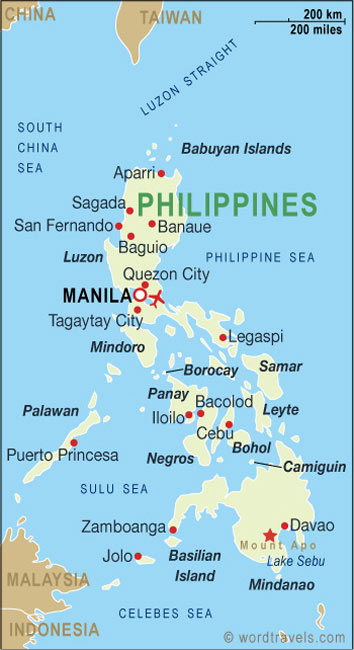
As you have seen on the news recently, the Philippines has been hit recently with two major Typhoons. As I write the country is preparing for a third, and much stronger storm, named Ramil locally or Lupit internationally.

The first Typhoon, Ondoy, killed several hundred Filipinos in Manila and the surrounding areas in late September. Flooding caused great damage to many structures in low areas, including a few orphanages. Our agency's offices in Manila were spared, as apparently were other government offices. The child we sponsor was also not affected by the storms.

Typhoon Pepeng hit north of Manila a few weeks later and triggered flooding and mudslides in these rural areas.

Amongst our adoption community, we have read harrowing stories of survival from the flood waters. I felt so badly those parents who have received adoption referrals but who had not yet traveled. The stress was so great until they, days later, received word that their children were okay.

Clean up from the mud and high waters continues day-by-day. This slow process is hampered by the continuing wave of storms. Disease from flood waters is a major concern.

Articles and photos on these storms can found at the links below, or by googling Philippines news. Unfortunately, there are many articles.

http://www.unicef.org/philippines/

http://www.unicef.org/infobycountry/philippines_51459.html

http://www.crs.org/philippines/katrina-of-philippines/

Video
http://english.ntdtv.com/ntdtv_en/ns_asia/2009-10-21/012908101278.html

Also - new: our agency, PSBI, is collecting monetary donations. For more information or to contribute visit: http://www.psbi.org/site/PageServer?pagename=PSBI_Typhoon_Relief_Fund_2009


I'll try to post an update in a few days, and additional updates on some happier subjects, like culture, food, music, trivia, etc. soon as well.